animedex nekos
nekos.best v2 is a curated SFW image / GIF API. animedex wraps
its three JSON-emitting endpoints as four high-level commands. The
collection is split into ~60 categories of which roughly half are
PNG portraits (husbando, neko, waifu, kitsune,
kemonomimi, …) and the rest are GIF reactions (baka,
cuddle, hug, kiss, laugh, …).
References
Site |
|
API documentation |
|
v2 endpoint reference |
|
Python module |
|
Rich models |
Backend: nekos.best v2.
Rate limit: 200 req/min anonymous, visible in the
x-rate-limit-limitandx-rate-limit-remainingresponse headers. The transport applies a 3 req/sec sustained ceiling with a 10-token burst budget to stay comfortably under the cap.Auth: never. The collection is fully anonymous.
NSFW: none. v2 dropped the NSFW tier; every record’s cross-source projection sets
rating='g'unconditionally.
Discover the catalogue — categories()
The alphabetised list of category names. The TTY render is one name
per line (no [src: …] marker because the result is a plain
list[str]):
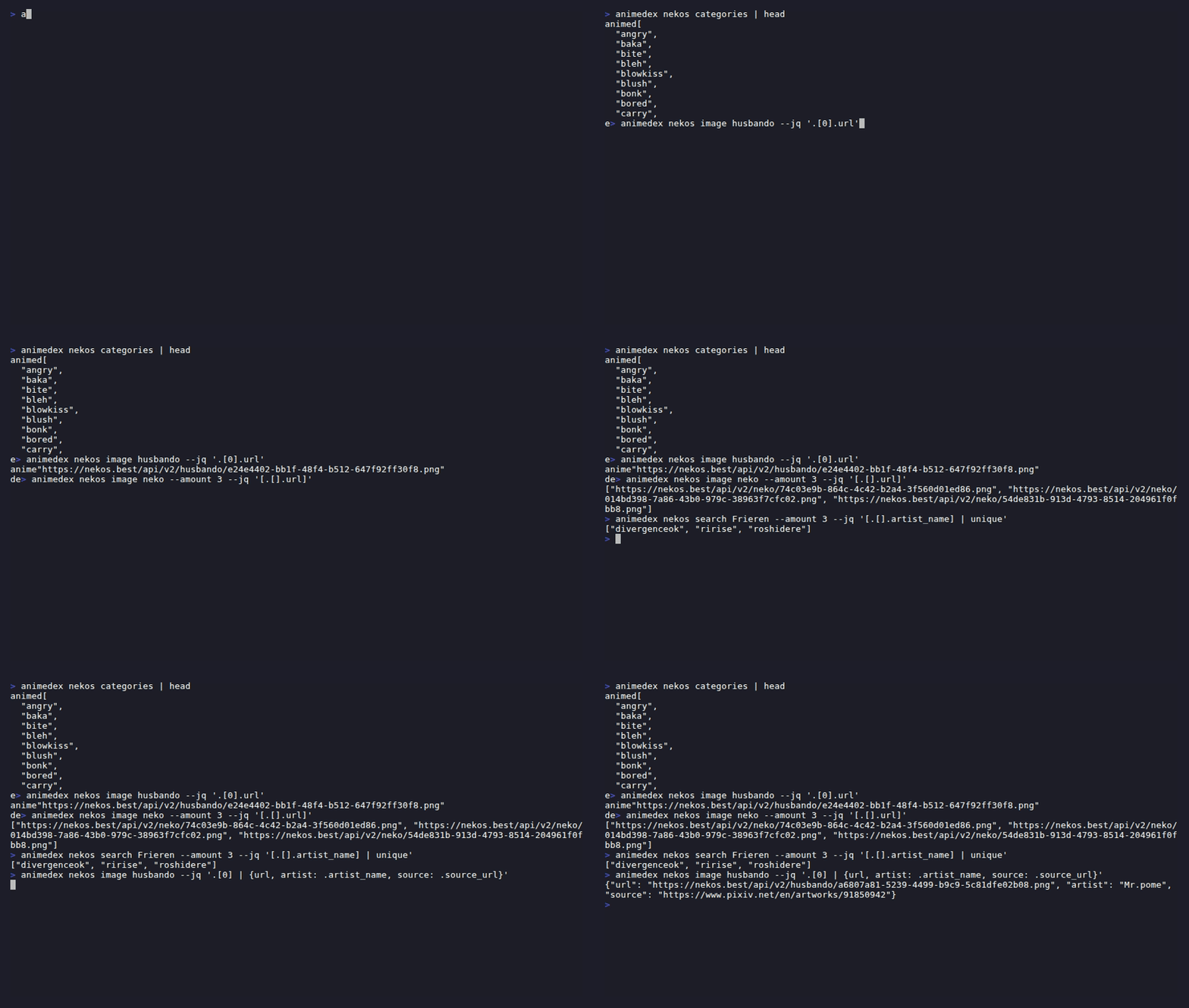
animedex nekos categories | head
# baka
# bite
# blush
# bored
# cry
# cuddle
# ...

animedex nekos categories --json | jq 'length'
# 60   (or however many categories nekos.best v2 currently exposes)
Per-category format — categories_full()
Same data, plus the asset format ("png" / "gif") per category:
animedex nekos categories-full --json --jq '."husbando"'
# => {
#      "format": "png"
#    }

# Filter to GIF categories only:
animedex nekos categories-full --json \
  --jq 'with_entries(select(.value.format == "gif")) | keys'
# => ["baka", "bite", "blush", "bored", ...]
Fetch random images — image()
image <category> [--amount N] returns N random rows from the
named category (1 <= N <= 20):
animedex nekos image husbando --jq '.[0] | {url, artist: .artist_name, source_url}'
# => {
#      "url":        "https://nekos.best/api/v2/husbando/<uuid>.png",
#      "artist":     "<artist name>",
#      "source_url": "<gallery URL>"
#    }

animedex nekos image neko --amount 3 --jq '[.[].url]'
# => [
#      "https://nekos.best/api/v2/neko/<uuid>.png",
#      "https://nekos.best/api/v2/neko/<uuid>.png",
#      "https://nekos.best/api/v2/neko/<uuid>.png"
#    ]

# GIF-format category — the asset URL ends in .gif
animedex nekos image baka --jq '.[0].url'
# => "https://nekos.best/api/v2/baka/<uuid>.gif"
Each row carries url, dimensions (width × height in
pixels), and best-effort attribution (anime_name /
artist_name / artist_href / source_url).
Metadata search — search()
search <query> [--type 1|2] [--category <name>] [--amount N]
matches the query against anime_name / artist_name /
source_url:
animedex nekos search "Frieren" --amount 3 --jq '[.[].source_url]'

# GIF results only (type=2):
animedex nekos search "Frieren" --type 2 --amount 3 --jq '.[].url'

# Restrict to one category:
animedex nekos search "Frieren" --category husbando --amount 5
Important: /search is fuzzy. The upstream always returns up
to ``amount`` results, falling through to a near-random ranking
when nothing closely matches — so callers cannot rely on an empty
result list as a “no match” signal. Treat low-similarity results as
hints, not as positives.
Endpoint summary
Command |
Python entry point |
Purpose |
|---|---|---|
|
list every category name (alphabetised) |
|
|
list categories with per-category format metadata |
|
|
random images / GIFs from one category |
|
|
fuzzy metadata search across all categories |
Cross-source projection
The rich NekosImage projects
onto the cross-source ArtPost shape
(also used for Danbooru and Waifu.im records) via
to_common(). The
projection is deterministic:
rating→ always"g"(v2 is SFW-only).id→"nekos:<filename>"derived from the asset URL (nekos.best has no numeric ID column).tags→[anime_name]when present, else empty list.width/height→ propagated from the upstream’sdimensionsblock.
This makes it trivial to dedupe nekos images alongside Danbooru posts in a downstream pipeline:
from animedex.backends.nekos import image
for img in image("husbando", amount=5):
    common = img.to_common()
    print(common.id, common.rating, common.url)
Gotchas
Headers-only direct-asset retrieval: the v2 endpoint
/<category>/<filename>.<format>returns the raw asset bytes with metadata in URL-encoded HTTP headers. animedex’s high-level layer does not surface this — pass through viaanimedex api nekos /<category>/<filename>.<format>if you need the bytes.Rate ceiling visible in headers: every response carries
x-rate-limit-remainingso you can budget calls explicitly.No content filter is needed at the agent layer. The Agent-Guidance block on every nekos subcommand notes this so an LLM agent shelling out does not redundantly apply a SFW filter on top of an already-SFW collection.
The Python library page covers the same surface from inside Python.